

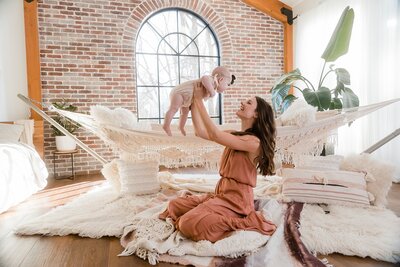
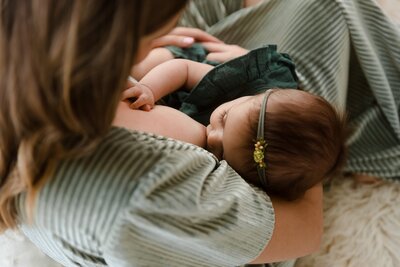

A feeding session is one of the few pauses in early motherhood that cannot be rushed. There may be a sleepy baby tucked close, a mother settling into a familiar hold, and a room that finally grows quiet. Learning how to capture breastfeeding portraits begins by respecting that reality: the image is never more important than the comfort, nourishment, or relationship unfolding in front of the camera.
These portraits do not need to be overly posed or revealing to feel intimate. The most enduring images often show the small details parents remember later: a hand resting on a shoulder, soft hair at the crown of a baby’s head, the curve of a mother leaning in, or the calm concentration that comes with meeting a baby’s needs. Thoughtful preparation and gentle direction make room for all of it.
Begin With Comfort, Consent, and a Flexible Plan
Breastfeeding portraits work best when the mother feels fully in control of the experience. Before the session, talk through what she hopes to see in her finished images. Some mothers love a close, documentary view of the feeding relationship. Others prefer wider, more modest compositions that emphasize connection without showing much of the nursing itself. Both approaches are valid, and neither requires an explanation.
Ask practical questions before the camera comes out. Is there a preferred side for feeding? Does baby typically need time to settle? Are there angles the mother would rather avoid? If there is an older sibling involved, when are they usually most cooperative? These details help shape a session around a real family rather than expecting a family to conform to a rigid shot list.
Keep the schedule loose. Babies do not nurse on command, and a session should never make a parent feel pressured to delay a feeding for the sake of a photograph. Plan enough time for diaper changes, burping, comforting, and breaks. If baby feeds before the planned moment, that is not a problem. There may be another opportunity later, or the tender after-feeding moments may become the images that matter most.
How to Capture Breastfeeding Portraits With Beautiful Light
Light should flatter the mother, preserve the quiet mood, and keep the scene honest. Soft window light is especially lovely for breastfeeding portraits because it wraps gently around skin and creates dimension without asking anyone to hold an uncomfortable position.
Place the mother near the window at a slight angle rather than facing it straight on. This gives shape to her face and keeps the light soft across the baby. If the window light is bright, sheer curtains can diffuse it. In a studio, a large soft light source can create the same effect while giving more control over the final look.
Avoid harsh overhead lighting when possible. It can create shadows under the eyes and make an already tender postpartum moment feel less restful in photographs. A slightly darker, softly lit image is often more elegant than one that is brightly exposed but flat.
Pay close attention to the background. A neutral bed, upholstered chair, or simple sofa lets the connection take center stage. Choose tones that feel warm and timeless rather than distracting. If the mother is wearing a soft dress, robe, or fitted top, consider how the texture will photograph around baby’s face and hands. Comfort comes first, but a little wardrobe guidance goes a long way toward creating art that belongs on the wall.
Guide Gently Instead of Posing Too Much
The best direction is often simple. Help the mother settle into a position that supports her body, then let her feed her baby in the way that works for them. A supportive pillow, a chair with arms, or a bed with pillows behind her back can make a noticeable difference. If she is physically comfortable, her shoulders soften and her expression follows.
Rather than asking her to look at the camera for every frame, offer quiet prompts. She might look down at her baby, smooth a tiny foot, close her eyes for a moment, or rest her cheek near the baby’s head. These prompts create movement without interrupting the feed or turning a private moment into a performance.
Photograph from several respectful distances. A wider image can show the setting and the quiet shape of mother and baby together. A medium portrait may hold the tenderness of a gaze. Close details can preserve the parts that change quickly: curled toes, a hand against the mother’s chest, eyelashes against a cheek, or fingers holding fabric.
Be mindful of clothing, nursing covers, and the mother’s preferred level of coverage throughout. A skilled photographer notices small adjustments before they become distractions in the final frame. This is not about perfection. It is about helping a mother feel cared for and beautifully seen.
Follow Baby’s Lead
There is no need to force the classic latch photograph if baby is restless, sleepy, or finished eating. Feeding portraits can include the moments before and after nursing: a mother lifting baby to her shoulder, a quiet burp, a milk-drunk nap, or a baby reaching up toward her face. In many galleries, those frames carry just as much emotional weight.
If baby becomes unsettled, pause. Lower the camera, let the parent respond, and give the family privacy if they need it. A calm photographer changes the tone of the room. That steadiness is especially valuable in the postpartum season, when even a well-planned outing can feel unpredictable.
Newborn safety also remains part of every decision. Baby should always be fully supported, never balanced in an unsafe position, and never left unattended for the sake of a composition. A beautiful image is not worth compromising a baby’s comfort or a parent’s confidence. The strongest photographs are made with patience, support, and a watchful eye.
Include the Whole Relationship When It Feels Right
Breastfeeding is often a private exchange, but it exists within a larger family story. If a partner is present, invite them into a few frames with a hand on the mother’s shoulder or a quiet glance toward the baby. Their role does not need to be staged to be felt.
Older children can be included, too, if the timing is right. A sibling sitting nearby with a book, leaning in for a kiss on baby’s head, or resting against mom can add depth without asking them to stay still for long. The goal is not a perfectly coordinated scene. It is a truthful one that reflects how the family holds each other during this season.
There are times when the most powerful choice is to keep the frame focused solely on mother and baby. It depends on the family’s vision and on what feels emotionally comfortable. A thoughtfully designed gallery can make room for both the quiet intimacy of nursing and the fuller context of family life.
Design for More Than the Screen
When planning breastfeeding portraits, think beyond a single social media post. Consider where the images may live years from now: in an album opened on a hard day, in a framed piece near the nursery, or in a collection that helps a child see how deeply they were cared for from the beginning.
Wall art generally benefits from a clean composition, gentle light, and room around the subjects. Albums can hold the complete story, pairing wide images with close details and the in-between moments that bring the session back to life. Digital files are convenient, but professionally produced artwork gives these memories a physical place in the home.
At Glean & Co, this kind of planning is part of the portrait experience. From wardrobe and light to the final artwork, every choice can be made with the mother’s comfort and the family’s long-term enjoyment in mind.
A breastfeeding portrait does not need to look flawless to be beautiful. Let the baby pause, let the mother breathe, and let the photograph hold the care that was already there.


LEAVE A COMMENT
Comments