

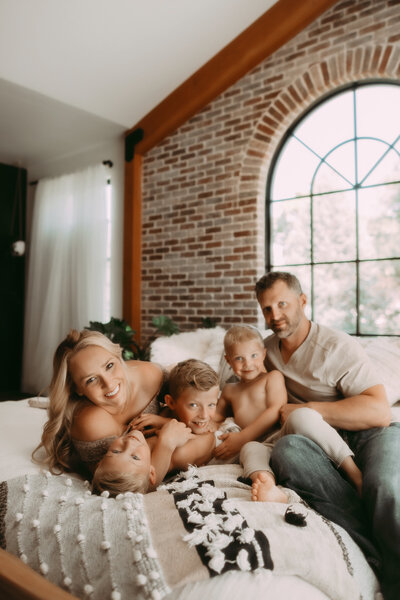
A new baby changes the rhythm of a household overnight, and a toddler often feels that shift most of all. So, can toddlers attend newborn sessions? Absolutely. With realistic expectations, thoughtful timing, and a photographer who understands newborn safety, including an older sibling can create some of the most meaningful images from your family’s first days together.
That said, a toddler’s participation does not need to look like an hour of perfect cooperation. The goal is not to ask them to perform. It is to make room for their real personality, protect everyone’s comfort, and capture the new shape of your family with care.
Can Toddlers Attend Newborn Sessions Safely?
Yes, provided that sibling photos are planned around safety rather than forced poses. Newborns are never placed in a position where a toddler is responsible for holding, balancing, or supporting them. Even the gentlest, most excited big sibling is still learning impulse control, body awareness, and how softly to move around a baby.
A trained newborn photographer will create sibling setups that are stable and closely supervised. This may mean photographing your toddler lying beside the baby, sitting near a securely supported newborn, or engaging with the baby while an adult is within arm’s reach. In some images, a parent may be supporting the baby just outside the frame. Composite images can also allow a photographer to blend carefully created frames without ever compromising safety.
At Glean & Co, every sibling moment is approached with the same attentive care as a newborn portrait. The image matters, but the baby’s safety and your toddler’s sense of security matter more.
The Best Age and Temperament for Sibling Photos
There is no magic age when toddlers become ready for a newborn session. Some 18-month-olds will offer a quick kiss, then happily move on to snacks. Some 3-year-olds will be deeply invested in showing the baby their favorite stuffed animal. Others may be wary, energetic, tired, or simply uninterested that day.
The most helpful question is not, “Will my toddler behave?” It is, “What kind of support will help my toddler feel comfortable?” A photographer can work with a range of ages and temperaments when the family arrives without the pressure of needing every frame to go a certain way.
Toddlers often do best when they know what to expect in simple terms. You might tell them that they will get to meet the photographer, have a few pictures with the baby, and then have time to play with a parent or caregiver. Avoid presenting the session as a test of being a “good big sibling.” That language can add pressure at a time when their world already feels different.
Why a Studio Session Can Be Easier on Families
Newborn sessions are intentionally slow-paced, which is wonderful for feeding, soothing, and settling a new baby. For a toddler, though, waiting quietly through that process can be difficult. A well-planned studio session solves this by photographing sibling and family portraits early, before a toddler reaches their limit.
Once those images are complete, one parent, grandparent, or trusted caregiver can take the toddler for a snack, a walk, or an outing nearby. The newborn portion of the session can then continue at the baby’s pace. This arrangement gives your older child an important role without asking them to spend several hours in a warm, quiet studio.
For Boise and Treasure Valley families, this can be especially helpful during unpredictable weather or in the early postpartum weeks, when loading everyone in and out of multiple locations feels like more work than it is worth. A prepared studio environment keeps the experience contained, comfortable, and easier to manage.
How to Prepare Your Toddler Before the Newborn Session
Preparation works best when it is gentle and practical. Keep your explanation short, and speak about the session close enough to the date that the details still feel relevant. Let your toddler know that the photographer will take pictures of the family and that they may be asked to sit close to the baby for a moment.
If you have the session wardrobe ready in advance, let your toddler try on their outfit before the appointment. Scratchy fabric, stiff shoes, or a favorite shirt suddenly being unavailable can become the issue that takes over the morning. Comfort is not a small detail. A comfortable child is more likely to be relaxed, curious, and willing to participate.
Bring familiar comforts, especially if your child is young or going through a more sensitive phase. A favorite snack, water, a quiet activity, and a beloved lovey can help. Sometimes that lovey even becomes part of the story in the photographs, a detail you may love seeing years later.
Try to protect sleep and meal routines as much as possible. A perfectly timed nap is not always possible with a new baby at home, but a hungry or overtired toddler has very little room left for patience. If your child wakes up in a difficult mood, do not assume the session is doomed. Experienced photographers know how to begin with movement, play, or a few low-pressure family images rather than demanding stillness immediately.
What to Expect During the Sibling Portion
The strongest sibling images are often made quickly. A toddler may give the baby one soft touch, one genuine smile, or one surprised look at those tiny toes. That brief moment can be enough. There is no need to repeat it until it stops feeling natural.
Your photographer may invite your toddler to look at the baby rather than directly at the camera. They may ask them to count the baby’s fingers, sing part of a familiar song, or snuggle beside a parent. These prompts create connection without requiring a toddler to understand formal posing.
There may also be a few moments of resistance. Your toddler might refuse to sit down, insist on being held, or decide that the studio chair is suddenly the only place they want to be. None of this is unusual. The best response is calm flexibility. A parent’s frustration can make a child feel more watched and less cooperative, while a relaxed reset can change the entire mood.
Sometimes the session calls for a different plan. If your toddler is clearly overwhelmed, it may be better to focus on family images with plenty of physical closeness, then release them from the task. If sibling portraits do not happen exactly as imagined, that does not mean the session failed. It means your family was met where it actually was that day.
Choosing Clothes That Feel Coordinated, Not Costumed
A cohesive wardrobe helps family portraits feel polished, but toddlers should still look and feel like themselves. Soft textures, gentle neutrals, and colors that complement your home can photograph beautifully without making a child feel overdressed or restricted.
Avoid clothing that needs constant adjusting, brand-new shoes that have not been broken in, or accessories your toddler regularly pulls off. If they have a favorite sweater, dress, or pair of soft pants that works within the color palette, it may be worth incorporating. A child who feels comfortable in what they are wearing is far more likely to settle into the experience.
A full-service studio wardrobe can remove much of this decision-making. Having options selected with the final artwork in mind creates a more refined result while saving exhausted parents from coordinating every detail during the newborn haze.
Give Yourself Permission to Let It Be Real
Many parents worry that their toddler’s mood will determine whether their newborn portraits are worth doing. It will not. The session is not a report card on your child, your parenting, or how smoothly everyone is adjusting.
Your toddler may be tender with the baby, hilariously skeptical, clingy with you, or too busy exploring to offer more than a few seconds of attention. Those responses are part of this season. A skilled photographer knows when to guide, when to pause, and when to preserve the small honest interactions that cannot be staged.
Bring your toddler, make a plan for their comfort, and leave room for them to be exactly who they are. The photographs do not need to prove that your family has it all figured out. They can simply hold the beginning of a relationship that will keep changing long after the newborn days have passed.


LEAVE A COMMENT
Comments