

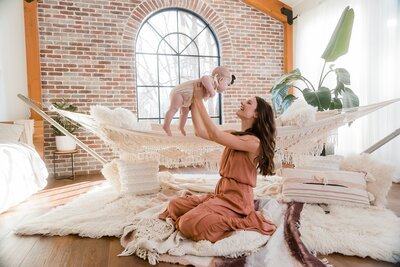

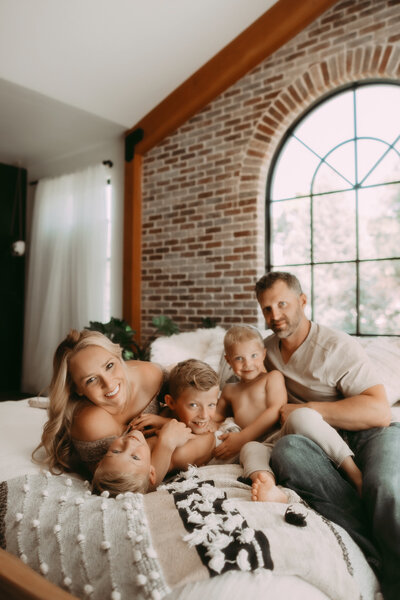
A family portrait deserves more than the first open patch of wall above the sofa. When you are deciding how to display family wall art, the goal is not to make every room feel like a gallery. It is to let the people and seasons that matter most belong naturally in the home you are living in now.
That may mean a large, quiet portrait in your bedroom, where you see it at the beginning and end of a long day. It may mean a thoughtfully gathered collection along the staircase, where your child can recognize their own story as they grow. The best display is not necessarily the biggest or most elaborate. It is the one that feels considered, holds up to daily life, and gives your images the presence they deserve.
Start with the room, not the frame
Before choosing a size or layout, stand in the room and notice how it is used. A formal dining room can carry a more dramatic statement piece because people tend to pause there. A busy entry may benefit from one strong image rather than several smaller pieces competing with shoes, bags, and the movement of family life.
Think about what you want to feel when you walk into the space. A newborn portrait may bring a sense of softness and calm to a primary bedroom. A joyful family image can add warmth to a living room. Milestone portraits often work beautifully in a hallway or playroom, where the passing years become part of the everyday landscape.
Also consider light. Direct sun can fade printed artwork over time, even when it is professionally produced. If a room receives strong afternoon light, choose a wall that is protected from it or use window coverings during the brightest hours. Bathrooms, laundry rooms, and other humid spaces can be difficult for framed paper art unless the materials and framing are designed to handle moisture.
Choose scale before you choose a gallery wall
The most common mistake in family wall art is going too small. A beautiful portrait can disappear when it is placed above a substantial sofa, console, bed, or fireplace and given too much empty wall around it. If you have ever taped an 8-by-10 print to a large wall and felt underwhelmed, scale was likely the issue, not the image.
As a general starting point, artwork above furniture should span roughly two-thirds to three-quarters of the furniture’s width. Above a queen or king bed, a single larger piece or a paired arrangement often feels more grounded than a small frame centered over the headboard. Above a sofa, consider one significant portrait, a diptych, or a carefully planned grouping that reads as one visual unit.
A larger piece does not have to feel loud. In fact, a beautifully printed portrait with a simple frame can feel calmer than a wall full of small, mismatched frames. The image itself has room to breathe, and the eye knows where to rest.
There is a trade-off, of course. One oversized piece creates immediate impact but asks you to choose a single image you will want to live with for years. A gallery wall offers more variety and can grow with your family, but it requires more planning to avoid visual clutter. Neither choice is more meaningful. Choose the format that fits your home and how you want to experience the images.
How to display family wall art at the right height
Height changes everything. Art that is hung too high can feel disconnected from the furniture and strangely formal, even when the portrait itself is warm and intimate. In most rooms, aim to place the center of the artwork around 57 to 60 inches from the floor. This is a useful guideline, not a rigid rule.
When hanging art above furniture, leave approximately 6 to 10 inches between the bottom of the frame and the top of the sofa, headboard, or console. The pieces should feel related, not as if they happen to share a wall. If your ceilings are tall, resist the urge to fill every vertical inch. Keeping art closer to the furnishings usually creates a more welcoming, collected feeling.
For staircases, follow the upward angle of the stairs rather than measuring every piece from the floor. Mark the arrangement with painter’s tape or paper templates first. This simple step lets you see whether the collection feels balanced before you put a single nail in the wall.
Let the image guide the placement
Not every portrait needs the same destination. Look closely at the emotion, composition, and color of the photograph before assigning it a spot.
A close newborn portrait often feels especially at home in a private space, such as the primary bedroom or nursery, where its quieter details can be appreciated. A wide family portrait with movement and connection may have enough energy for a central living area. A breastfeeding image, maternity portrait, or image that feels particularly personal may be best placed where it can be meaningful to you without needing to perform for every guest who enters your home.
This is one reason a guided artwork appointment can be so valuable. Seeing images beside frame samples and at true-to-life sizes helps families move beyond the question, “Which photo is my favorite?” Instead, they can ask, “What do I want this room to hold?” At Glean & Co, that decision is treated as part of the portrait experience, not an afterthought once files are delivered.
Create a gallery wall that still feels calm
A gallery wall can tell a fuller story, especially when you want to include maternity, newborn, and family portraits over several years. The key is consistency. You do not need identical images, but you do need a visual thread that lets the arrangement feel intentional.
Choose one or two frame finishes that work with your home, such as warm oak and soft white, or matte black and natural wood. Keep the spacing between frames consistent, usually around 2 to 3 inches. Then decide whether your layout will be symmetrical or organic. A symmetrical grid feels clean and architectural, while an organic arrangement feels more collected and relaxed.
Avoid adding every favorite image. Gallery walls gain strength from editing. Select portraits that vary in closeness and expression: perhaps one wide family image, a tender parent-and-baby portrait, a detail image, and a few individual moments. When every frame has equal visual intensity, the wall can feel busy. A balance of quiet and expressive images gives the entire collection more depth.
If your family is still growing, leave room for future chapters. An arrangement that begins with four pieces can expand naturally when a new baby arrives or a child reaches another milestone. Planning for that possibility keeps the wall from feeling finished too soon.
Match materials to the way you live
Beautiful artwork should not create another household task to worry about. Consider where sticky fingers, energetic play, pets, and everyday sunlight are most likely to happen. Professionally printed, archival artwork with quality framing is an investment in both appearance and durability, especially in high-traffic rooms.
Canvas has a soft, painterly presence and can work well in relaxed spaces. Framed fine art prints offer detail and polish, particularly for portraits with subtle tones and close connection. Wood-mounted or more durable display options may be practical in family areas where you want the warmth of artwork without feeling overly precious about the wall.
Frame color matters, but it does not need to match every finish in the room. A frame should relate to the space, not disappear into it. If your home has warm wood flooring and cream walls, a natural wood or soft bronze frame may feel right. In a cleaner, more modern room, white oak, black, or a slim neutral frame can provide structure without stealing attention from the image.
Give the artwork room to become part of home
Once your wall art is installed, resist the impulse to keep rearranging it every few weeks. Live with it. Notice what catches your eye while you carry a sleepy baby down the hall, clear breakfast dishes, or come home after a difficult day. The most successful family artwork does not demand attention. It quietly becomes part of the way your home remembers you.
Choose the image that makes you pause, size it generously enough for the wall, and place it where real life happens. Years from now, that is what will make it more than decoration.


LEAVE A COMMENT
Comments