

A baby’s first year has a way of moving in chapters. One week you are counting kicks and setting up the nursery. Soon, you are learning the shape of your baby’s sleepy face, watching them sit independently, and wondering how they are suddenly standing at the coffee table. A thoughtful milestone timeline guide gives those changes a place to land, without turning your family’s story into another item on an already full parenting checklist.
Portraits are not about documenting every month perfectly. They are about choosing the seasons that feel most meaningful to you, then preserving them with enough intention that the images can live beyond your phone. For many families, four well-planned sessions tell the first-year story beautifully: maternity, newborn, sitter, and first birthday.
Why a First-Year Portrait Timeline Helps
The practical reason to plan ahead is simple: the most popular portrait windows are short. Newborn sessions, especially, are best reserved before baby arrives so there is space on the calendar when life becomes wonderfully unpredictable. Planning early also means you can coordinate wardrobe, artwork, and the overall look of your collection rather than making each session feel like a separate project.
There is an emotional benefit, too. Early parenthood can feel both tender and disorienting. You may be taking hundreds of candid photos while rarely appearing in them yourself. A first-year portrait plan creates intentional opportunities for you to be present with your baby, not just responsible for recording everyone else.
At Glean & Co, that planning is designed to feel supportive rather than demanding. The details – styling, hair and makeup, wardrobe options, soothing a newborn, and choosing finished artwork – are handled with care so you can arrive and simply be with your family.
Milestone Timeline Guide: The Portrait Windows That Matter
Every baby develops at a different pace, so age ranges are guides rather than rules. A baby who sits at six months and a baby who needs another month are both exactly on schedule for themselves. The goal is to photograph what your child is doing now, not to force a milestone for the sake of a date on the calendar.
Maternity: 28 to 34 Weeks
Maternity portraits are often most comfortable between 28 and 34 weeks. Your pregnancy is visibly established, while many parents still have enough energy to enjoy the experience and move comfortably through a session. If you are expecting twins, managing a high-risk pregnancy, or simply feeling ready earlier, it may make sense to photograph closer to 26 to 30 weeks.
This session is about more than a beautiful dress and a flattering pose. It marks the threshold between anticipation and arrival. You may not feel entirely like yourself in your changing body, which is precisely why gentle guidance matters. Professional hair and makeup, curated wardrobe choices, and posing that honors rather than hides your shape can make the experience feel restorative.
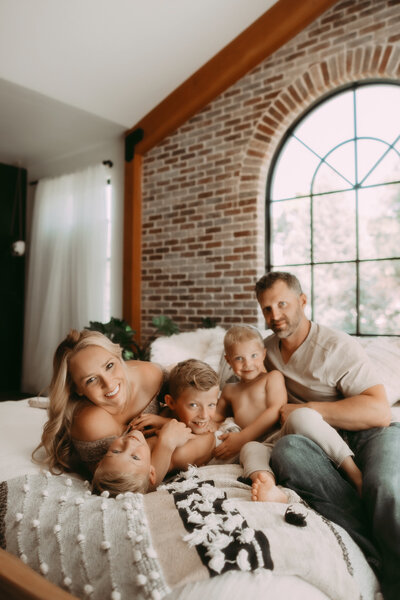
Consider including your partner and older children if that feels true to your family. You do not need to manufacture a picture-perfect reaction from a toddler. A hand on your belly, a quiet embrace, or a child’s curious energy can be enough.
Newborn: Around 7 to 21 Days
Newborn portraits are typically photographed within the first two to three weeks after birth. During this window, babies are often sleepier and naturally curl into the cozy, womb-like positions parents recognize from those earliest days. Skin texture, flaky feet, tiny fingers, and the way they fold into your chest are all part of the record.
That said, a session does not become less meaningful if your baby arrives early, needs extra medical care, struggles with feeding, or simply is not photographed within that ideal range. Safety, health, and your recovery come first. Older newborn sessions can be just as lovely, often with more awake eye contact, stretching, and personality.
For posed newborn photography, expertise is non-negotiable. Baby should be supported at all times, the studio should be warm and calm, and every pose should be adjusted to the baby’s comfort and flexibility. Composite editing may be used for images that appear to show a baby balancing independently. What looks effortless in a finished portrait should always be carefully constructed with safety behind it.
Parents often worry they need to arrive with a perfectly sleepy baby and an organized diaper bag. You do not. A well-run newborn session builds in time for feeding, diaper changes, settling, and breaks. Babies lead the pace.
Sitter Milestone: About 6 to 9 Months
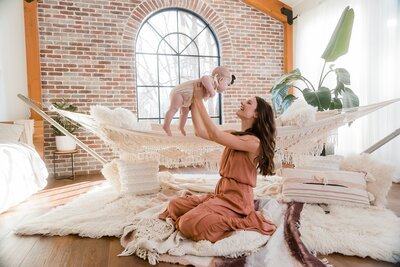
The sitter stage is a favorite for many parents because it is full of expression. Your baby may be sitting steadily, grabbing their toes, offering big smiles, and responding to your voice with unmistakable recognition. They are not yet racing away from the camera, but their personality is becoming wonderfully clear.
Most sitter portraits work best when baby can sit independently for a few moments without support. That may happen at six months, eight months, or later. If your baby is still working on sitting, a tummy-time-focused session or a slightly delayed date can be a better fit than trying to rush the milestone.
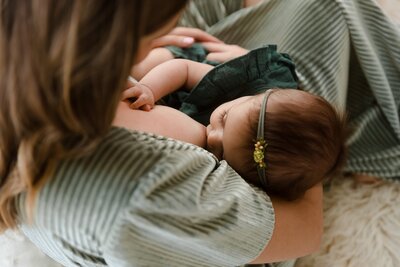
This is also a lovely time for breastfeeding portraits, if that relationship is something you want to remember. Feeding a baby is often repetitive, intimate, exhausting, and deeply personal. Photographs from this stage do not need to be overly styled to carry weight. A quiet image of connection can say plenty.
First Birthday: 11 to 13 Months
A first-birthday portrait session celebrates more than a cake and a candle. By this age, your baby may be standing, cruising, taking tentative steps, clapping, pointing, laughing hard, or making very firm opinions known. The images have movement and humor that are distinctly different from the newborn stage.
Cake smash sessions can be a joyful option, particularly for babies who are comfortable exploring new textures and tastes. But they are not required. Some babies dislike messy hands, unfamiliar frosting, or the attention of a studio setup. A clean, classic birthday session with a simple outfit, a favorite toy, or a few family portraits may suit your child better.
If you do choose a cake smash, keep expectations relaxed. Some babies enthusiastically dig in. Others carefully touch one finger to the frosting and decide they have seen enough. Both reactions make honest, memorable photographs.
Build a Collection, Not a Pile of Files
When sessions are planned as a first-year collection, they can be designed to belong together. That might mean choosing a consistent color palette, reserving a similar level of styling, or deciding from the beginning where the artwork will live in your home.
Digital images offer flexibility, and they absolutely have a place. But the images that become part of family life are often the ones you can see without opening an app. A framed newborn portrait in the hallway, an album on the coffee table, or a series of small prints in a nursery gives these moments a physical presence.
Think about the rooms you use most. A large statement piece may be right for a living room, while a linen album might be the better choice if you want to revisit the entire story privately. There is no universal right answer. The best artwork is the one you will actually live with.
When Life Does Not Follow the Calendar
A milestone timeline is helpful, but it should never become a source of pressure. Babies get sick. Parents are recovering. Siblings have hard weeks. Work schedules change. Sometimes the session you imagined needs to move, simplify, or look different than planned.
The same is true of milestones themselves. Walking at nine months is not more photographable than walking at fourteen months. A baby who is serious in portraits is not giving you less than a baby who grins at every sound. The truest images come from meeting your family where you are, not from asking your child to perform.
If you are starting late, begin with the next stage that feels worth remembering. You have not missed your chance to document your family well. There will always be a new expression, a new connection, and a new version of home to preserve.
Choose the sessions that make you pause when you imagine looking back five, ten, or twenty years from now. Then give yourself permission to be in the frame. Your baby will not remember the planning, the wardrobe decisions, or whether the cake was perfectly frosted. They will grow up seeing that they were held, welcomed, and deeply known.


LEAVE A COMMENT
Comments