

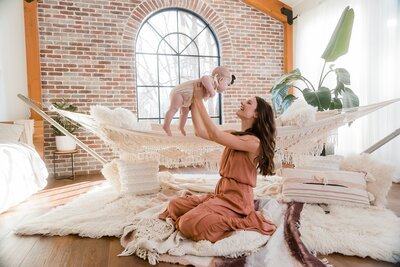
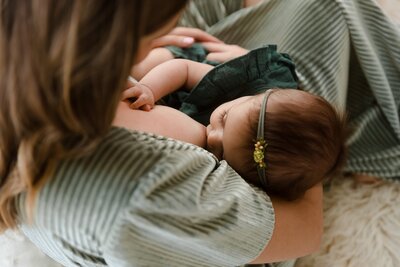
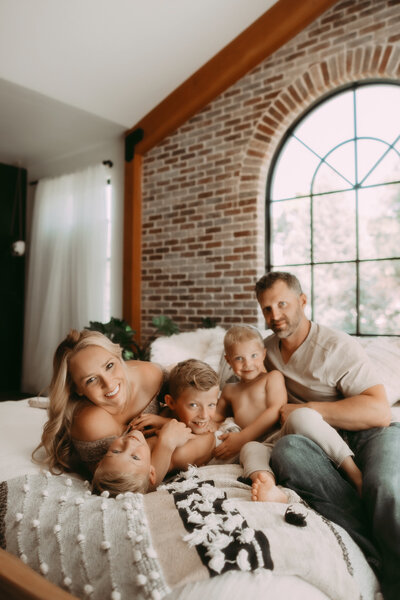

One day your baby still fits curled against your chest, and the next they are pushing up, sitting steady, or giving you that first unmistakable grin with two tiny teeth showing. That pace is exactly why parents start searching for baby milestone photography ideas – not because every month needs a production, but because growth changes the face, body language, and connection so quickly.
The best milestone portraits do not rely on elaborate props or trendy setups. They work because they capture who your baby is right now, with enough intention in styling, lighting, and composition to make the image feel lasting years from now. If you are planning a session for your baby’s first year, it helps to think less about gimmicks and more about what you will still want to see on your walls when this stage is long gone.
What makes baby milestone photography ideas work
A strong milestone session usually balances three things: developmental stage, visual simplicity, and comfort. If one of those is missing, the photos can feel off. A beautiful setup means very little if your baby is overstimulated, and a perfectly happy baby can still disappear visually if the styling is too busy.
That is why the most successful sessions are often built around a single skill or season of development. Three months looks different from six months, and six months looks very different from one year. The goal is not to force your baby into a concept. It is to design around what they can naturally do.
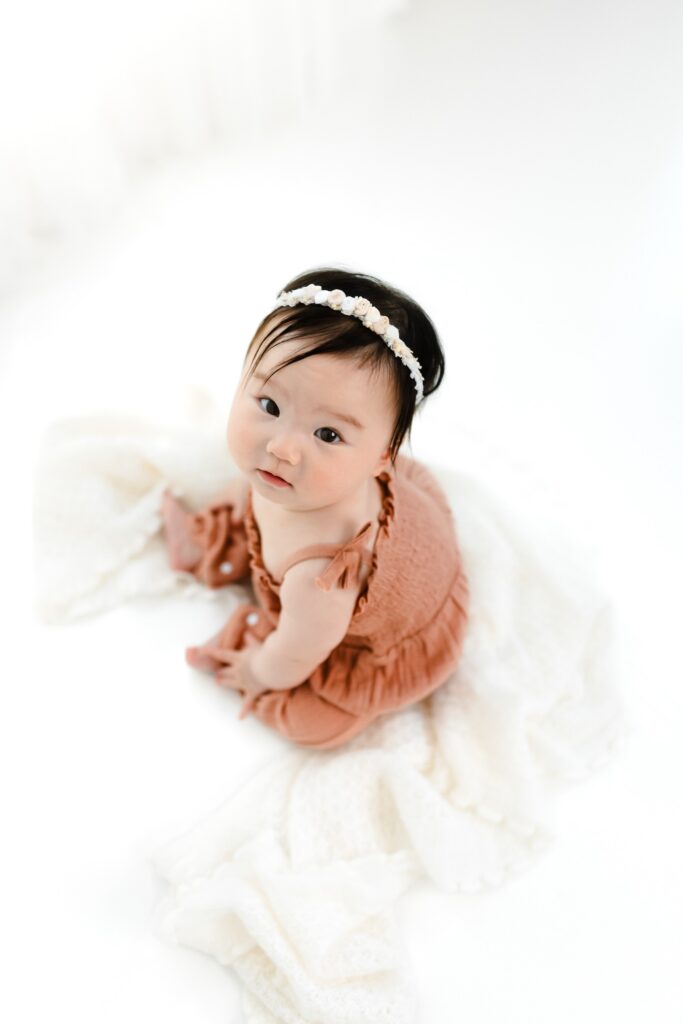
1. Keep it simple with a clean portrait setup
One of the most timeless baby milestone photography ideas is also the most restrained. A neutral backdrop, soft light, and minimal styling put the attention where it belongs – on expression, eye contact, and emerging personality.
This approach works especially well at every stage of the first year because it does not compete with developmental changes. At four months, it highlights soft rolls and alert eyes. At eight months, it lets sitting posture and curiosity take center stage. At one year, it captures movement and confidence without feeling chaotic.
For parents who love a polished home and want artwork that blends naturally into their space, clean portraiture tends to age better than heavily themed sets.

2. Document tummy time and early strength
Not every milestone needs to be smiling straight at the camera. Tummy time portraits can be unexpectedly beautiful because they show effort, determination, and the earliest signs of independence.
This stage often photographs well between three and five months, depending on your baby. The strongest images happen when baby is well rested and the setup feels calm. A soft blanket, simple studio floor, or lightly textured fabric can be enough. The point is to show the way they lift their head, study the room, and begin to engage with the world on purpose.
3. Use a favorite heirloom piece with restraint
A knit blanket from grandma, a christening gown, or a chair that has moved through generations can add emotional depth to milestone portraits. The key is restraint. The heirloom should support the image, not take it over.
This is one of those baby milestone photography ideas that depends on the item itself. Some pieces are visually strong and need very little around them. Others are meaningful but not particularly photogenic, so they work best as one portion of the session rather than the whole concept.
When used thoughtfully, heirlooms create photographs that feel rooted in family history instead of trend.
4. Capture the sitting stage before crawling takes over
If there is one milestone many parents underestimate, it is sitting independently. This stage often lands in the sweet spot where babies are expressive, stable, and not yet committed to racing out of every frame.
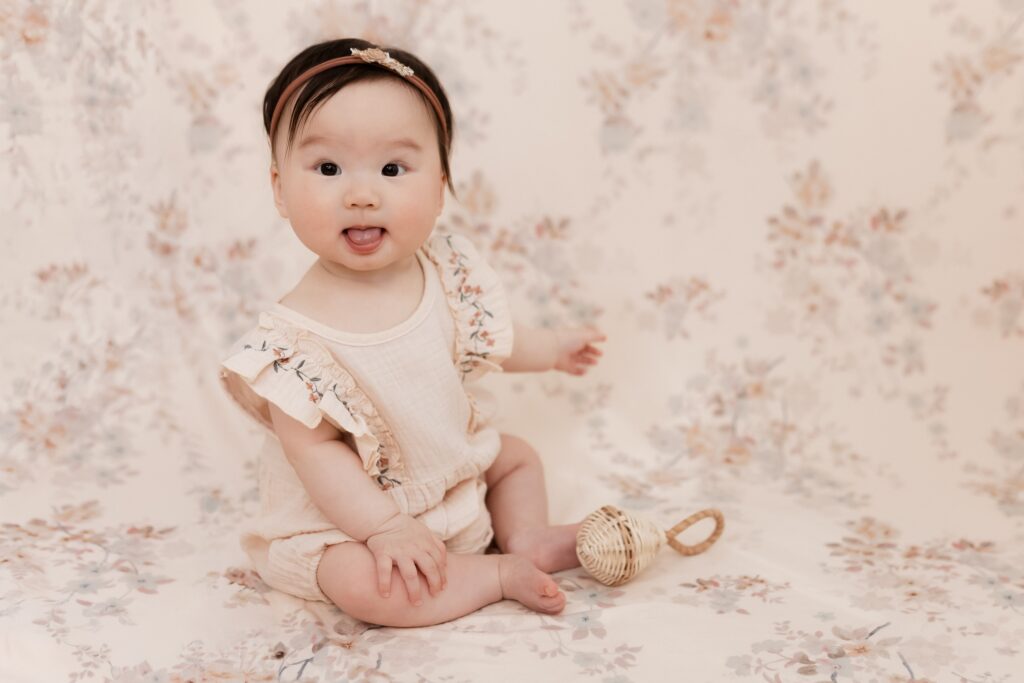
That makes six to eight months ideal for portraits that feel full of personality. Babies at this age often laugh more easily, interact with simple objects, and show stronger facial expressions. A classic sitter session with refined wardrobe choices can produce some of the most frame-worthy artwork of the entire first year.
Baby milestone photography ideas for texture and warmth
The most beautiful sets often feel layered without looking crowded. Texture helps with that. Think linen, soft knits, gauze, boucle, washed cotton, or a beautifully upholstered chair scaled appropriately for baby.
The reason texture matters is subtle but important. Babies have delicate features, soft skin, and rounded shapes. Harsh materials or shiny surfaces can feel visually cold. Soft textures create warmth and depth while still keeping the look elevated.
This does not mean every session needs baskets, florals, or elaborate styling. In fact, less usually works better. A textured cream blanket and a thoughtfully chosen outfit can do more than a themed setup with ten accessories.
5. Include parent hands for scale and connection
You do not always need full family portraits to make a milestone session feel emotionally rich. Sometimes a parent’s hands holding tiny feet, supporting a sitter at the waist, or reaching toward baby from just outside the frame can say everything.
These images work especially well when parents want to remember how small this stage really was. They also add connection without requiring everyone to be camera-ready for a full session. For many postpartum mothers, that can feel like a welcome middle ground.
6. Try a bath setup for older babies
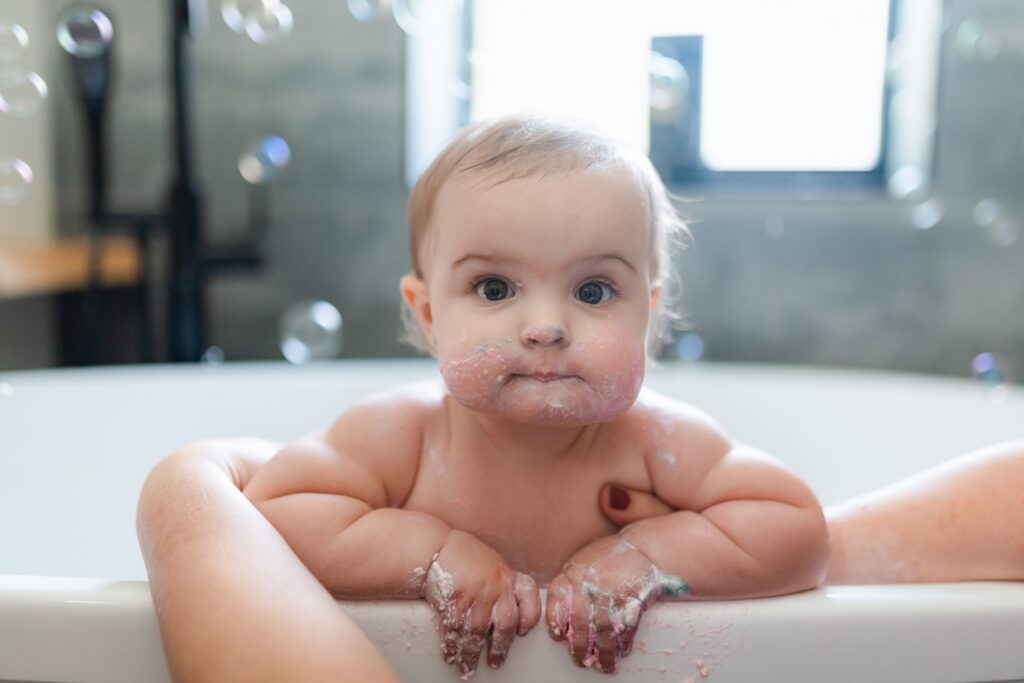
For babies who can sit well and enjoy water, a simple bath setup can create joyful, relaxed portraits. This idea works best when the styling is refined rather than novelty-driven. A small tub, warm water, soft towels, and natural tones keep the focus on expression and movement.
It is not right for every baby. Some love it, some do not, and forcing it rarely ends well. But when temperament and age line up, bath portraits can feel fresh, playful, and beautifully honest.
Here at Glean & Co we love incorporating the bath during the cleanup stage of our Cake Smash & Splash first birthday sessions!
7. Let one meaningful toy join the session
A beloved stuffed rabbit or wooden rattle can add story without turning the portrait into a toy catalog. If your baby lights up when they see a certain comfort item, it may be worth including for a few images.
The trade-off is that trendy or brightly branded toys can date a photo quickly. If longevity matters most, choose one item with simple lines and gentle color. That way the image still feels timeless while preserving a real piece of daily life.
8. Mark seasonal milestones without going overly themed
There is nothing wrong with acknowledging that your baby turned six months in the fall or one year near Christmas. Seasonal references can be lovely when they stay understated.
Instead of costumes or oversized props, consider color palette and texture. Warm rust, cream, evergreen, or soft spring tones can suggest the season without overwhelming the portrait. This approach keeps the images tasteful and far easier to display year-round.

9. Photograph standing with support
Those early standing portraits, whether at a stool, chair, or parent-supported edge, capture such a specific chapter of first-year development. There is pride in them. You can see babies realizing their bodies can do something new.
Safety matters here, of course. Any setup involving standing should be closely supported and never forced before baby is ready. But when approached carefully, these portraits hold a kind of energy that sitting images do not. They hint at toddlerhood without leaving babyhood behind.
10. Plan a first birthday portrait that is not only a cake smash
Cake smash sessions are popular for a reason, but they are not the only way to celebrate turning one. Some families love the mess. Others want a cleaner, more editorial feel.
A wonderful compromise is to begin with classic first birthday portraits before bringing in cake, balloons, or a simple celebratory detail. That way you preserve both sides of the milestone: the polished portrait and the playful reality. If your child hates sticky frosting, you still leave with beautiful images.
11. Create a consistent series across the first year
If you know early on that you want to document several stages, consistency makes the final collection feel far more intentional. Similar lighting, wardrobe direction, or composition can turn separate sessions into a cohesive story.
That does not mean every image needs to match exactly. Babies change too much for that, and honestly, that is the point. But a thread of consistency helps when designing an album or wall gallery later. It gives the growth more visual impact.
12. Think beyond the digital gallery
Some of the best baby milestone photography ideas start with the finished artwork in mind. A portrait meant for an heirloom album may be styled differently than one intended for a nursery wall or hallway gallery.
This matters more than parents often expect. Tiny details that feel charming on a phone screen can get lost in print, while a quiet, beautifully lit portrait can become stunning once framed at scale. When you plan with the final piece in mind, the session feels more purposeful from the start.
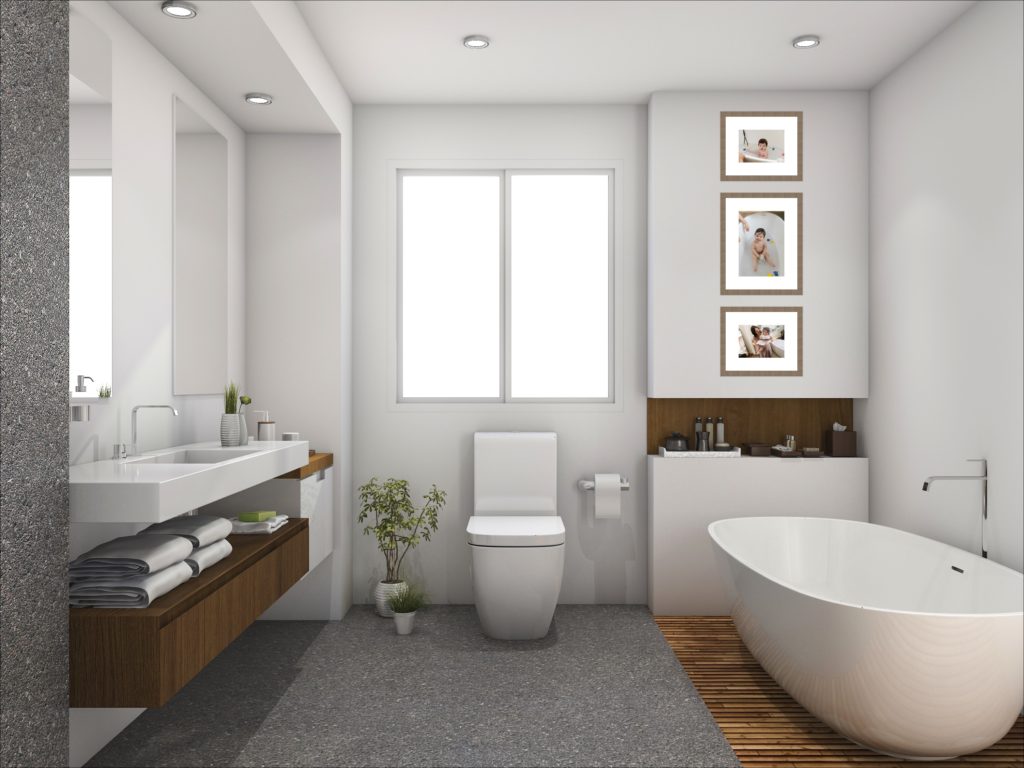
Wondering what to do with images like the bathtub ones we talked about above? Consider alternative spaces like your bathroom! Not every framed image has to go above the fireplace.
How to choose the right milestone to photograph
Not every family wants monthly sessions, and not every baby enjoys being photographed at every stage. For most parents, the most meaningful milestones tend to be newborn, tummy time or supported pushing up, sitting, and first birthday.
If you are choosing only one session during the baby stage, sitting is often the most versatile. If you want a fuller story, spacing sessions around major developmental shifts usually feels more valuable than sticking to the calendar. A seven-month sitter gallery will often matter more than a formal six-month session if that is when your baby is happiest and strongest.
For families in Boise who want a more guided experience, working with a studio that helps with wardrobe, pacing, and artwork design can make these decisions much easier. You do not have to figure out every visual detail while also managing naps, feeding schedules, and the general fog of early parenthood.
The photographs you return to most are rarely the busiest ones. They are the images that show your baby clearly, comfortably, and honestly at a stage that passed faster than expected. Start there, and the right ideas tend to follow.


LEAVE A COMMENT
Comments