

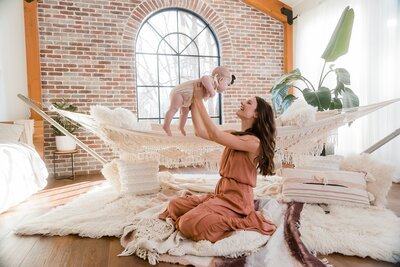
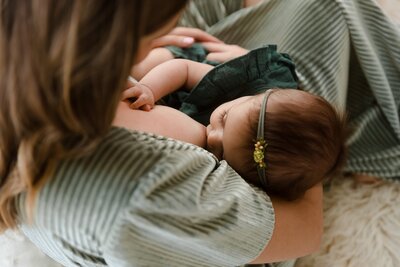

The best motherhood session poses do not ask you to perform a version of motherhood that does not feel like you. They create room for the real things: the way your baby settles into your shoulder, the familiar weight of a toddler on your hip, the laugh that arrives when someone wriggles out of a hug. A beautiful portrait begins with thoughtful styling and expert direction, but it should still look and feel like your family.
At Glean & Co, we guide every pose with care, then leave enough space for connection to take over. You never need to arrive knowing where your hands go or how to make a child look at the camera. The most meaningful images often happen between the directions.
What Makes a Motherhood Pose Work
A flattering motherhood portrait is less about holding still and more about creating a natural relationship between bodies. A slight turn toward a window, a relaxed shoulder, and your child tucked close can make an image feel soft and intentional without looking posed. Your photographer will watch for the small adjustments that matter: lengthening your posture, placing your chin toward the light, and keeping hands relaxed rather than gripping.
The right pose also depends on your child’s age and temperament. A sleepy newborn can be held close in calm, supported positions. A six-month-old may light up when they can sit with help and reach for your face. Toddlers usually do better with movement and a simple game than with a request to sit perfectly. The goal is never rigid compliance. It is a portrait that feels honest, polished, and worthy of living on your walls.
The Best Motherhood Session Poses for Connection
1. The seated cradle hold
Sit comfortably with your baby nestled across your lap or chest, with your body turned slightly away from the camera. This pose creates a gentle shape and gives your hands a purpose. Look down at your baby, brush a finger over their hair, or bring your face close to theirs.
It is particularly lovely for newborns because it feels calm and secure. The image often becomes even stronger when your baby is awake and simply studying your face rather than sleeping.
2. Chest-to-chest standing portraits
Hold your baby upright against your chest, with one hand supporting their bottom and the other resting high on their back or shoulders. This is one of the most natural positions for a new mother, and it gives a newborn a deeply supported place to settle.
Your photographer may ask you to close your eyes, breathe in, or turn your cheek toward your baby’s head. Those small movements create tenderness without requiring a big expression. It is also a forgiving pose when you are newly postpartum and want to feel held by the frame rather than overly exposed.
3. The shoulder rest
For babies with steady head control, a shoulder pose highlights the view you know so well: their cheek against you, tiny fingers on your collarbone, and their eyes looking out into the room. Keep your body angled and let your gaze move between your child and the camera.
This position is beautiful in both close-up and full-length portraits. It also works wonderfully when a baby is feeling uncertain in a new setting, because they remain close to the person who makes them feel safe.
4. Walking together
Movement is often the answer for toddlers who have no interest in sitting still. Hold hands and walk slowly, let them lead you a few steps, or encourage them to come in for a quick hug halfway through. Rather than asking for eye contact, your photographer can capture the way your child looks up at you or swings their free hand.
This pose is not about covering distance. It is about giving an active child a simple job and allowing their personality to show. A flowing dress or softly textured wardrobe can add movement without distracting from the relationship in the image.
5. The hip carry
A toddler perched on your hip is a familiar, affectionate pose that can feel much more natural than a formal seated portrait. Support them securely with one arm, soften the shoulder beneath them, and use your free hand to hold theirs, touch their leg, or smooth their hair.
If they are in a playful mood, let them nuzzle your cheek or tell you something silly. If they are shy, let them look away. A portrait does not need both faces directed at the lens to be powerful.
6. Foreheads together
Bring your forehead gently to your child’s forehead while you sit or stand close. This creates an intimate, sculptural image, especially when the light falls softly across both faces. It works with newborns, older babies, and children who can follow a quiet prompt.
The key is not to press or force the moment. Think of it as a pause. Take one breath there, and let your expression rest. That is often all it takes.
7. The face-to-face laugh
Hold your baby or toddler just far enough away to see their face, then talk, sing, or make the sound that always gets their attention. The pose itself is simple, but it creates lively eye contact between mother and child. Your photographer can shoot over your shoulder, from the side, or close in on the expressions.
This is especially helpful for families who worry they are not “photogenic.” Genuine interaction is more compelling than a practiced smile, and it gives your hands and eyes something natural to do.
8. The quiet cuddle on the floor
A padded rug, bed, or studio floor can create a relaxed setting for sitting close with older babies and toddlers. Pull your child into your lap, wrap your arms around them from behind, or let them lean back against your chest. Read a short board book, tickle their toes, or simply pause together.
Floor poses work best when the child is given permission to move. A skilled photographer will photograph the cuddle, then follow the transition when your child leans forward, reaches for you, or decides they would rather investigate the hem of your dress.
9. The nursing portrait, if it feels right
Breastfeeding portraits can be quiet, powerful records of a relationship that is often invisible in the day-to-day rush. They do not need to be revealing to be meaningful. With careful posing, soft wardrobe choices, and flattering light, the focus remains on your connection and your baby’s contentment.
This is always optional. Some mothers want this chapter documented; others want the session to center on cuddling, play, or a more editorial feeling. Both choices are completely valid, and a well-planned session reflects your comfort level.
10. The hands-and-details portrait
Not every image needs to show your full faces. A close portrait of your hands around your baby’s feet, your toddler’s hand resting in yours, or a small arm looped around your neck brings depth to a final gallery. These images are especially meaningful in albums, where they offer a quieter visual rhythm between larger portraits.
Detail poses are also useful when a child needs a break from being photographed. There is no pressure to smile, sit up, or look anywhere specific.
Poses That Include Siblings Without the Struggle
When siblings join a motherhood session, begin with the pose that requires the least from the oldest child. Sitting beside you with a hand on the baby, leaning into your shoulder, or standing close for a brief hug can be enough. The more complicated the arrangement, the less likely it is to feel relaxed.
For toddlers and preschoolers, it helps to photograph the group portrait first, then release expectations. A child who cannot sit beside a newborn for long may give you a wonderful image while kissing the baby’s toes or racing back into your arms. Those unscripted moments often become family favorites.
Newborn safety remains the priority in every setup. Babies should always be fully supported, with a parent or trained photographer within reach. Images that appear to show a baby in an unsupported position may require careful compositing or hands-on support throughout. A beautiful portrait is never worth taking a safety shortcut.
How to Feel Comfortable in Front of the Camera
The most helpful preparation is not practicing poses in a mirror. It is choosing a studio experience that removes decisions from your plate. Professional hair and makeup, a curated wardrobe, gentle pacing, and clear direction allow you to arrive as you are and be cared for while the portrait is created.
Wear something that lets you hold, sit with, and move toward your child comfortably. Soft fabrics and an easy fit tend to photograph beautifully, but comfort is not a compromise in a luxury portrait experience. It is part of what lets your expression stay relaxed.
If you are worried about a child’s mood, tell your photographer ahead of time. Hunger, naps, sensory needs, shyness, and postpartum recovery all affect how a session should be paced. The plan can be adjusted around your family rather than asking your family to conform to a rigid plan.
The pose you remember most may not be the one where everyone looked at the camera. It may be your child reaching up for your face, your newborn curled under your chin, or the second your toddler decided the session was a game. Give yourself permission to let that be enough. With patient guidance and a little room to breathe, those are the moments that become artwork you will keep returning to.


LEAVE A COMMENT
Comments