


The gown that looks breathtaking in a finished maternity portrait is not always the one that feels most obvious on a hanger. When you are learning how to choose maternity gowns, the goal is not to dress like someone else for a day. It is to find a piece that honors your changing body, photographs beautifully, and lets you stay comfortable enough to be present in the experience.
For many expecting mothers, getting dressed is the most vulnerable part of planning a maternity session. Your body may feel unfamiliar. You may be managing swelling, tenderness, or the simple fatigue of late pregnancy. A thoughtfully chosen gown removes one major decision from the day and gives your images a sense of ease, shape, and intention.
How to Choose Maternity Gowns That Photograph Beautifully
Start by considering the feeling you want your portraits to hold. A maternity gown does more than provide coverage. Its fabric, neckline, color, and movement all influence whether the final image feels soft and intimate, dramatic and editorial, classic and refined, or relaxed and natural.
Rather than choosing based on trends alone, think about where you will display the artwork. If you imagine a framed portrait in a quiet bedroom or an album you will revisit for years, a timeless silhouette in a considered color often has more staying power than an overly seasonal print or a highly embellished design. That does not mean every gown must be neutral. It means the color and style should still feel like you.
Prioritize fit over the size on the label
Maternity gown sizing is rarely consistent from one designer to another. A size label matters far less than how the gown supports and drapes around your body. Look for a gown that accommodates your bust and belly without pulling across either area. If a fabric is stretched too tightly, it can create horizontal tension lines that distract from the gentle curves you want to celebrate.
The most flattering fit usually defines the smallest point above or around the belly, then falls with room through the hips and legs. Empire waists, soft wrap styles, and gowns with stretch panels are popular for good reason: they create shape while allowing you to breathe, sit, and change positions comfortably.
Avoid sizing up automatically if it leaves too much fabric through the shoulders or neckline. A gown that slips, gapes, or requires frequent adjusting can make it hard to relax. If you are between sizes, try to judge the fit by the bust and ribcage first, then choose a silhouette with enough give for your belly.
Choose fabric with movement and structure
Fabric is one of the biggest differences between a gown that simply fits and one that photographs with dimension. Flowing materials such as chiffon, tulle, and lightweight silk-like fabrics catch air and create gentle movement. They are especially lovely for standing portraits, outdoor sessions, and images where the gown can be lightly gathered or lifted.
More substantial fabrics, including knit, velvet, or crepe, offer a different kind of beauty. They create cleaner lines and can feel especially polished in a studio setting. A fitted knit gown can show the shape of pregnancy in a simple, honest way, while a structured fabric brings a more formal, fashion-forward presence.
There is a trade-off. Very sheer fabrics often need nude undergarments, slips, or carefully placed layers, and they can feel less forgiving if you are self-conscious about areas such as your arms or thighs. Heavier fabrics may feel warm, particularly for a summer session. Your comfort should guide the choice as much as the visual effect.
Let color support your skin tone and your home
Soft creams, warm taupes, muted rose, dusty blue, sage, and rich earthy tones tend to photograph with depth while keeping the attention on your face and connection. Jewel tones can also be striking when they suit your coloring and the overall mood of the session.
Pure white can be beautiful, but it needs careful lighting and styling to retain detail in photographs. Likewise, very dark gowns can create drama, though their folds may not show as clearly in low-light settings. If you are unsure, mid-tone colors are often a graceful middle ground. They offer richness without overwhelming the image.
Consider your partner’s clothing as well. You do not need to match exactly, but the colors should belong together. A flowing mauve gown beside a partner in a soft charcoal or warm ivory shirt can feel cohesive. Bright competing colors, bold logos, and high-contrast patterns tend to pull attention away from the connection between you.
Select a Neckline That Helps You Feel Like Yourself
A neckline changes the mood of a maternity gown quickly. Off-the-shoulder styles and sweetheart necklines can feel romantic and softly feminine. Square necklines offer a clean, modern line, while a higher neckline may feel more covered and composed. A deep V can elongate the neck and photograph beautifully, but only if you are comfortable with the amount of exposure when bending, sitting, or holding a child.
If your bust has changed significantly during pregnancy, make sure the neckline stays secure as you move. Try lifting your arms, sitting down, and turning sideways before deciding. A gown should support you without constant pinning or checking.
Sleeves are equally personal. Long, draped sleeves can add movement and provide coverage. Cap sleeves and sleeveless designs keep the silhouette lighter. If you tend to focus on your upper arms in photos, choose a sleeve that feels intentional rather than wearing a separate cover-up that may bunch or shift during the session.
Plan for the Stage of Pregnancy and the Session Setting
Most maternity portraits are photographed between 28 and 34 weeks, when the belly is typically rounded but many mothers still feel comfortable moving around. Still, every pregnancy is different. If you are carrying twins, dealing with discomfort, or scheduling later in pregnancy, a gown with generous stretch and easy entry becomes even more valuable.
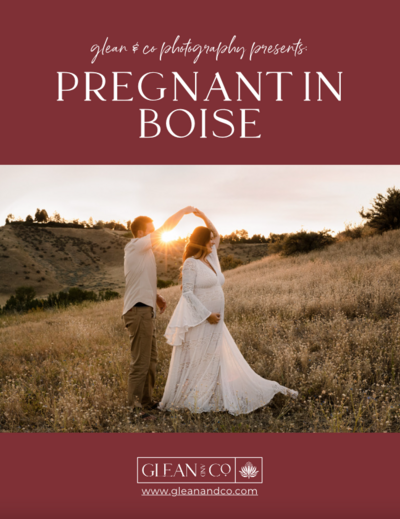
For an outdoor session in Boise or elsewhere in the Treasure Valley, think about season and ground conditions. A long train can look extraordinary against open fields or textured landscapes, but it may collect dust, burrs, or moisture. That is not necessarily a reason to avoid one – it simply helps to have a plan and a photographer who can arrange the fabric with care.
In a controlled studio environment, you can confidently choose more delicate layers, fuller skirts, or a gown with a dramatic train. The setting protects the garment and makes temperature, privacy, and changing arrangements much easier to manage.
Do Not Underestimate Comfort and Practical Details
A beautiful gown should not require you to suffer through your session. Before committing, consider how it fastens, whether you can sit comfortably, and what undergarments it requires. Zippers can be difficult to reach late in pregnancy, while lace-up backs may need assistance. Stretchy gowns are often easiest to put on, but make sure they recover their shape rather than becoming sheer when stretched.
Bring the undergarments you intend to wear when trying gowns. Seamless, skin-tone options usually disappear best beneath light fabrics. Depending on the gown, you may feel more comfortable with a supportive strapless bra, adhesive cups, or simply no bra at all. There is no correct answer beyond what makes you feel secure and comfortable.
Also consider your shoes, even if they may not appear in every image. Choose something stable enough to walk and stand in. Bare feet often work beautifully for indoor portraits or softer outdoor styling, while a low heel can subtly improve posture without asking too much of your body.
Consider a Curated Studio Wardrobe
You do not need to purchase a gown just to have a meaningful maternity portrait experience. A curated client wardrobe can save time, reduce uncertainty, and give you access to pieces selected specifically for the camera. At Glean & Co, wardrobe choices are considered alongside your session styling, body comfort, and the artwork you hope to create afterward.
This approach can be especially helpful if you love the look of maternity gowns but do not know what will fit best once you arrive. A professional studio can guide you toward silhouettes that complement your shape, assist with fabric placement, and make small adjustments that help a gown look effortless in photographs.
The right maternity gown should leave you feeling supported, not disguised. Choose the one that allows you to stand a little taller, breathe a little deeper, and recognize yourself in the mirror before the first photograph is taken.

LEAVE A COMMENT
Comments