

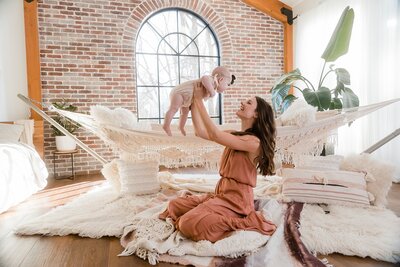


A family portrait session can sound simple until it lands in the middle of real life: a toddler who has stopped napping, a baby who needs to eat constantly, work calendars, laundry, and the familiar question of what everyone will wear. Thoughtful Boise family photo planning is not about making every detail perfect. It is about creating enough margin that your family can arrive cared for, comfortable, and ready to be together.
The images you love most are rarely born from forcing a moment. They come from a plan that respects your children’s rhythms, gives you clear decisions ahead of time, and leaves room for personality once the camera is out. Whether you are marking a new baby, a first birthday, or a season when your family simply looks and feels different, these choices can make the experience feel far more manageable.
Start Boise Family Photo Planning With the Season You Want to Remember
Before choosing a date, consider the story you want the photographs to hold. An indoor studio session offers consistency, privacy, and a calm place to settle in, especially with a newborn or young baby. It also removes the uncertainty of Boise weather, which can shift quickly between bright sun, wind, and cold. A studio can be particularly welcome when getting everyone out the door already feels like a major accomplishment.
Outdoor sessions offer a different kind of energy. They can feel spacious and playful, with room for children to move and interact naturally. The trade-off is timing: light, temperature, and seasonal conditions matter more. Summer evenings are often beautiful, but they may overlap with an early bedtime. Fall color is lovely, but the season can be brief and temperatures may be less forgiving for babies.
There is no universally right answer. For a family with a newly walking toddler, an outdoor setting may give them the freedom they need. For postpartum parents who want an unrushed, polished experience, a studio may be the more restorative choice. Choose the setting that supports your actual family, not the one that feels most impressive on a mood board.
Book Around Rhythms, Not Just Open Calendar Squares
A well-timed session makes a noticeable difference, particularly in the first years. When possible, schedule around your child’s most reliable window of the day. For many babies, that means after a feeding and a solid nap. For toddlers, it may mean protecting nap time rather than asking them to skip it for photographs.
This does not mean a child must be cheerful every second to create beautiful images. Children are allowed to have big feelings, need a snack, or take time to warm up. Still, planning around their baseline needs gives everyone a better starting point. Share your child’s schedule and temperament with your photographer before the session. A thoughtful photographer can build in breaks, adjust the flow, and guide the family without turning the experience into a performance.
For newborn photographs, the calendar is especially personal. Some families prefer to photograph those early, sleepy days, while others need more time to recover, establish feeding, or simply feel ready to leave home. Both choices are valid. The best timing is the one that protects your wellbeing while honoring what you want to remember.
Give Yourself a Buffer Before You Leave
The hour before a session is where many parents lose the calm they hoped to bring. Build in more time than seems necessary. Set clothes aside the night before, pack diapers and wipes, and plan a simple meal or snack before you begin getting ready.
If professional hair and makeup are part of your experience, let that be one less task on your list. You deserve to be in the photographs without also carrying the full weight of preparing everyone for them. The goal is not to look unlike yourself. It is to feel rested, polished, and present enough to enjoy being photographed.
Choose Wardrobes That Feel Coordinated, Not Costumed
The strongest family portraits usually begin with clothing that has movement, texture, and a cohesive color story. Start with one piece you genuinely love, often a dress or blouse for the person who carries the most mental load for the session. From there, build the rest of the family’s wardrobe around its tones rather than trying to match everyone exactly.
Soft neutrals, muted earth tones, warm creams, gentle blues, and subtle prints tend to photograph beautifully because they keep the attention on faces and connection. Texture can add depth without distraction: linen, knitwear, cotton gauze, soft denim, or a dress with quiet movement. Avoid large logos, neon colors, and very high-contrast patterns, which can pull focus away from the expressions you will want to revisit for years.
Comfort matters just as much as color. A child who cannot bend, climb, or be held comfortably in an outfit is unlikely to enjoy the session. For babies, choose clothing that fits well and allows easy changes. Bring a backup outfit if spit-up or a diaper surprise is a realistic possibility, because it usually is.
A curated client wardrobe can remove a surprising amount of stress here. Rather than ordering several outfits, hoping they fit, and returning what does not work, you can select from pieces that have already been considered for fit, color, and how they photograph. It is a small part of planning that can free up meaningful mental space.
Prepare Children Without Making It a Big Event
Children often do better when they know the broad outline of what will happen. A day or two before the session, tell them they will get dressed up, spend time with the family, and have their picture taken. Keep the explanation light. Avoid attaching too much pressure to smiling, behaving, or doing things “right.”
Instead of promising a reward only if they cooperate, bring familiar comfort items and let the session include some play. A favorite small toy, a quiet snack, or a beloved blanket can help a child regulate. If that item appears in a few images, it may become part of the truth of this season rather than something to hide.
Your job is not to manage every expression. Your photographer can prompt connection, direct the light, and recognize when it is time to pivot. Your role is to stay close, offer reassurance, and remember that your child does not need to be still to be loved or photographed well.
Think Beyond the Session: Plan for the Artwork
A portrait session is only one part of preserving a family season. Before the photographs are made, it helps to consider where you hope they will live afterward. Do you picture an album on the coffee table that your children can pull down and revisit? A framed portrait in the hallway? A collection of images that shows your family growing over time?
Making that decision early can guide the session itself. A wide, connected family image may be ideal for a statement wall piece. Closer, quieter portraits can become an album spread that feels deeply personal. Professional printing matters because it gives color, paper, and longevity the attention your photographs deserve. Digital files are convenient, but they are not always a plan for actually seeing the people you love.
At Glean & Co, guided ordering helps families make these decisions with support rather than leaving them with a gallery and another unfinished task. The right product is not necessarily the largest or most elaborate one. It is the one that fits your home and makes it easy to return to these images.
Leave Room for the Real Moments
The best plan has structure, but it also has flexibility. Someone may need a feeding break. A preschooler may want to be held for the first ten minutes. Your baby may be awake when you expected sleep, or serious when you expected smiles. None of that means the session has gone wrong.
Family photographs are not evidence that everyone was perfectly composed. They are a record of how closeness looked in this particular chapter: the hand on your shoulder, the weight of a child in your arms, the laugh that comes after the posed moment falls apart. Plan carefully, then allow your family to be human inside the plan. That is often where the images become most meaningful.


LEAVE A COMMENT
Comments