

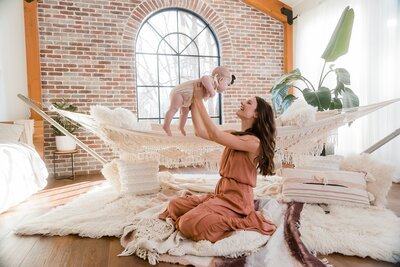

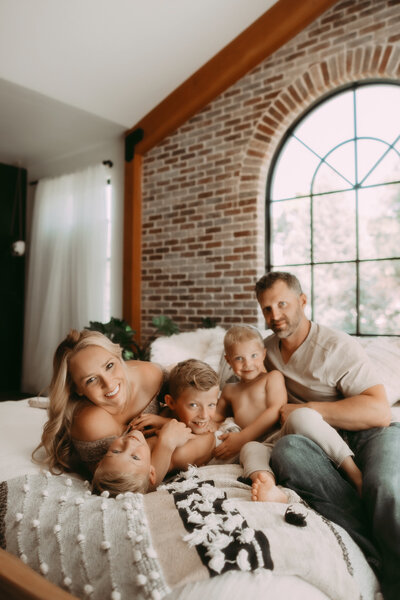
A family portrait should not spend its life in a camera roll. It deserves a place where you can see it during ordinary mornings, busy school-day exits, and the quiet minutes after bedtime. This family portrait wall design guide will help you turn the images you love into artwork that feels intentional in your home, rather than another project waiting for the right weekend.
For many parents, choosing the photographs is easy. Deciding what belongs on the wall, how large it should be, and whether it will still feel right in five years is where the uncertainty begins. A thoughtful plan removes that pressure and creates a result that feels personal, polished, and lasting.
Begin With the Wall, Not the Frame
Before selecting products or arranging a gallery, look at the wall itself. Its location tells you what the artwork needs to do. A large wall above a sofa or bed can hold one statement portrait or a coordinated collection. A stairway offers room for a story that grows over time. A narrow entry wall may need one vertical piece with enough visual presence to be noticed as you come and go.
Stand several feet away and consider the viewing distance. Artwork above a couch is usually seen from across the room, so a small print can disappear even if the image is beautiful. In most living rooms, larger artwork is the more comfortable choice. It gives the portrait room to breathe and lets faces remain visible from where your family actually sits.
There is a practical guideline designers often use: wall art above furniture should span roughly two-thirds to three-quarters of the furniture’s width. It is a helpful starting point, not a rule. A low, wide console may call for a horizontal piece, while a tall wall with a high ceiling might be better suited to a vertical grouping.
Choose Images That Feel Like Your Family
The strongest portrait wall is not necessarily made of the most formally posed images. It is made of images that return you to a real version of your family: the way your baby settled against your chest, your toddler’s determined expression, the laughter that happened between directions, or the calm confidence of a mother in a season that often feels anything but calm.
Start with the image that carries the most emotional weight. This is often your anchor portrait. From there, choose supporting images that add variety without competing for attention. A close-up detail, a connection-filled sibling image, and a more spacious family portrait can work together beautifully because each offers a different feeling.
For a newborn session, parents are often drawn to every tiny feature, and understandably so. Hands, lashes, curled feet, and the softness of a sleeping profile can be especially meaningful in an album. On a wall, however, prioritize images with strong expression, connection, and a clear focal point. Details can support the collection, but the larger piece should usually hold the relationship at the center.
Let Your Home’s Style Guide the Mood
Your portraits do not need to match every pillow or paint color. They should belong in the room, though. Consider the home as a whole: warm woods, soft neutrals, layered textiles, clean modern lines, or collected traditional pieces. The finish and framing should complement that environment rather than feeling separate from it.
Black-and-white portraits can be especially striking in homes with varied colors or strong patterns, because they simplify the visual field and place attention on emotion. Color portraits bring warmth and context, especially when wardrobe, light, and tones have been thoughtfully styled. Neither is more timeless by default. The right choice depends on the image and the room where it will live.
A Family Portrait Wall Design Guide to Scale
The most common design regret is ordering artwork that is too small. It is understandable. Small prints can feel like the cautious choice, particularly when you are imagining a wall from a phone screen. But a portrait wall should feel like a deliberate part of the room, not an afterthought floating in a large blank space.
If you are deciding between two sizes, choose the larger one when the wall and budget allow. A generously scaled portrait creates impact with fewer pieces, which can be ideal for a calm, elevated home. One beautifully framed statement image above a bed or sofa may feel more refined than several undersized frames.
Gallery walls offer a different kind of impact. They work well when you have a series of images that belong together, such as maternity portraits paired with newborn photographs, or family portraits collected over several years. The key is consistency. Matching frame finishes, similar mat widths, and a considered color treatment create unity even when the images show different seasons of family life.
Before hanging anything, map the arrangement with painter’s tape or paper templates cut to the size of each frame. This lets you test height, spacing, and overall balance without putting holes in the wall. Keep frames close enough to read as one composition, usually around two to three inches apart, while allowing the grouping enough space around its edges.
Build a Collection That Can Grow
Your home does not need every milestone represented at once. In fact, leaving room for future chapters often makes a portrait wall more meaningful. A newborn portrait might begin in the nursery, then move to a hallway as a family collection takes shape. A single frame can become a pair, then a small gallery that quietly documents the years.
Consider choosing a framing style you can repeat. This does not mean every piece must be identical, especially if rooms have different personalities. It means having a visual thread: natural oak, soft white, classic black, or another finish that can work across future sessions. This is particularly helpful for families who know they want to document pregnancy, a new baby, and the changing shape of their immediate family over time.
Albums and wall art also serve different purposes. An album holds the full story, including the tender in-between photographs that may not need a place on the wall. Wall art gives a few defining images a daily presence. Choosing both is not redundant. It allows you to preserve the breadth of a session while giving your favorite images a place in the rhythm of your home.
Consider Light, Materials, and Daily Life
Where artwork hangs affects how it lasts. Avoid direct, prolonged sunlight when possible, even with professionally produced archival products. In bright rooms, observe the wall at different points in the day. Glare from windows and overhead lighting can change how a finish looks, particularly behind glass.
Materials matter because family artwork is handled, moved, and lived with. Professionally printed and framed pieces are designed for longevity in ways consumer prints often are not. Color accuracy, archival inks, quality mounting, and durable framing protect the work from fading, warping, and the subtle wear that comes with time.
For homes with young children, placement matters too. A low hallway wall can be a lovely place for family portraits, but it may not be the best location for a large glass-framed piece if it will take the brunt of backpacks, toy bins, and excited little hands. A studio can help you choose products and placements that honor both your design vision and the reality of family life.
Give Yourself Permission to Be Guided
You do not need to become an interior designer to create a wall that feels finished. A guided ordering appointment is valuable because it turns abstract choices into something you can see. Comparing frame samples, viewing artwork at true scale, and considering images beside one another makes decisions far easier than trying to picture them alone at midnight.
At Glean & Co, this is part of the experience: photographs are created with their final home in mind, then thoughtfully curated into artwork that fits your family and your space. The goal is not to fill a wall quickly. It is to help you choose pieces you will be glad to live with every day.
Start with the image that makes you pause. Give it enough scale to be seen, choose materials made to last, and let the wall become a quiet reminder of the people who make your house feel like home.


LEAVE A COMMENT
Comments